
Moons of Rokar, Public Post
Why Rokar Became a Red Planet (PB)
Every fantasy world needs a first impression.
Before readers know the history, before they understand the conflicts, before they meet the characters, they feel something. They see a color. They sense an atmosphere. They step into a mood.
For Rokar, that first impression was always red.
Not a simple, bright red. Not just a “Mars-like planet” red. Rokar needed to feel older, warmer, heavier, and more emotional — a world shaped by mineral dust, desert wind, ancient stone, copper light, danger, memory, and survival.
That is why Rokar became a red planet.
Not as decoration.
As identity.
The World Needed Its Own Visual Language
When I first began imagining Rokar, I knew it could not feel like a familiar Earth-like fantasy world with different names placed on top.
It needed its own presence.
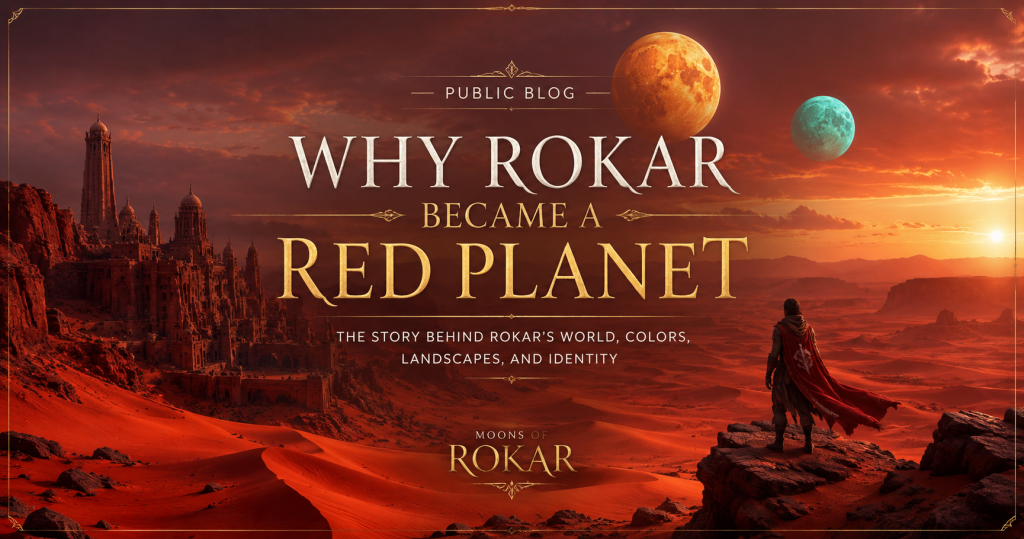
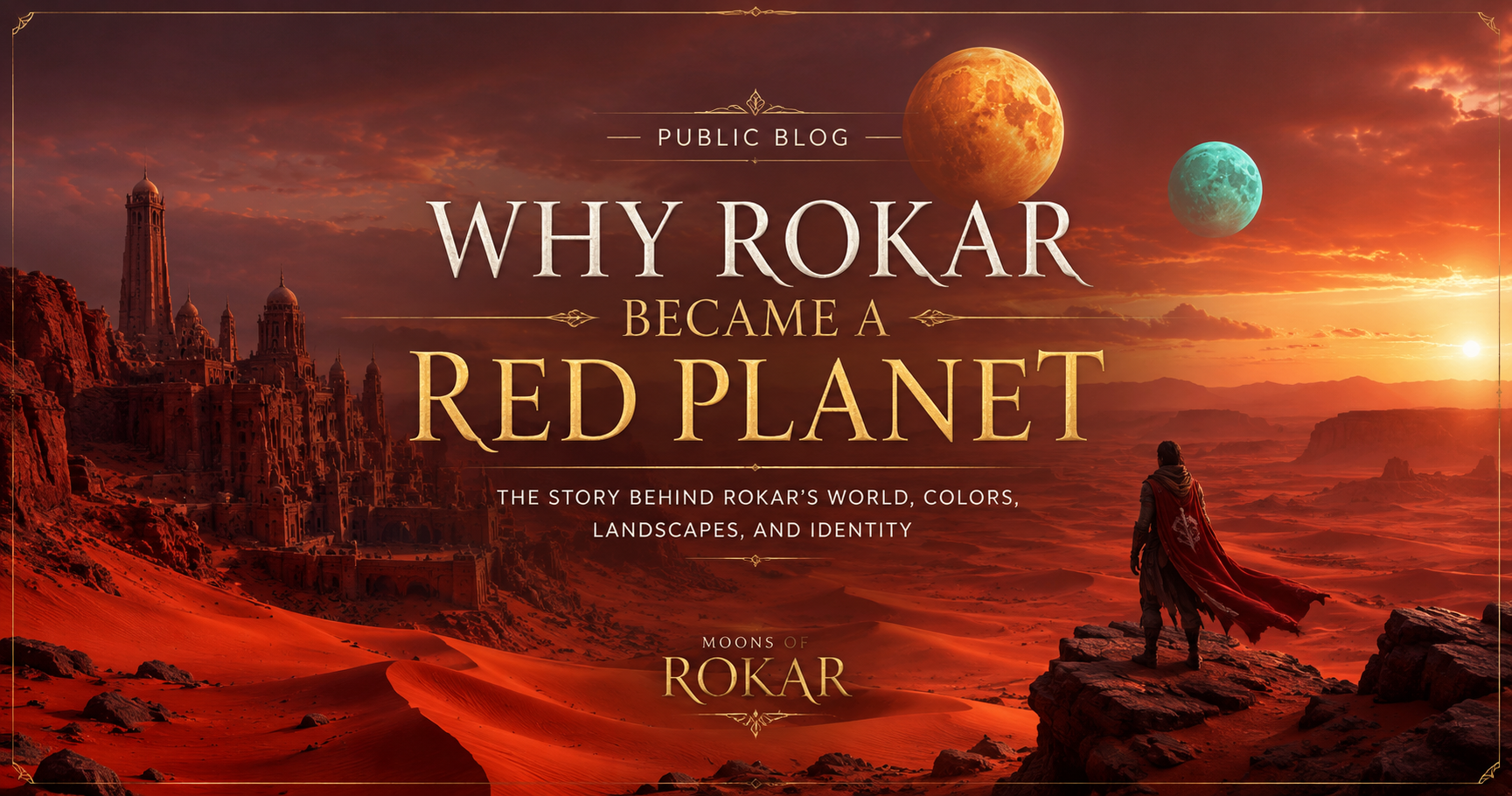
The red desert, warm mineral stone, copper haze, dusty crimson skies, amber light, ancient ruins, and twin moons all became part of Rokar’s visual language.
These details are not just background elements. They help the world feel consistent and recognizable.
When readers see Rokar, I want them to know they are somewhere else.
Red Is More Than a Color
For Rokar, red can mean many things.
It can feel beautiful.
It can feel dangerous.
It can feel warm.
It can feel violent.
It can feel ancient.
It can feel alive.
That range matters because Rokar is not only one kind of world.
In the main Moons of Rokar stories, the red world can feel harsh and dangerous. It carries war, survival, betrayal, loyalty, and consequence.
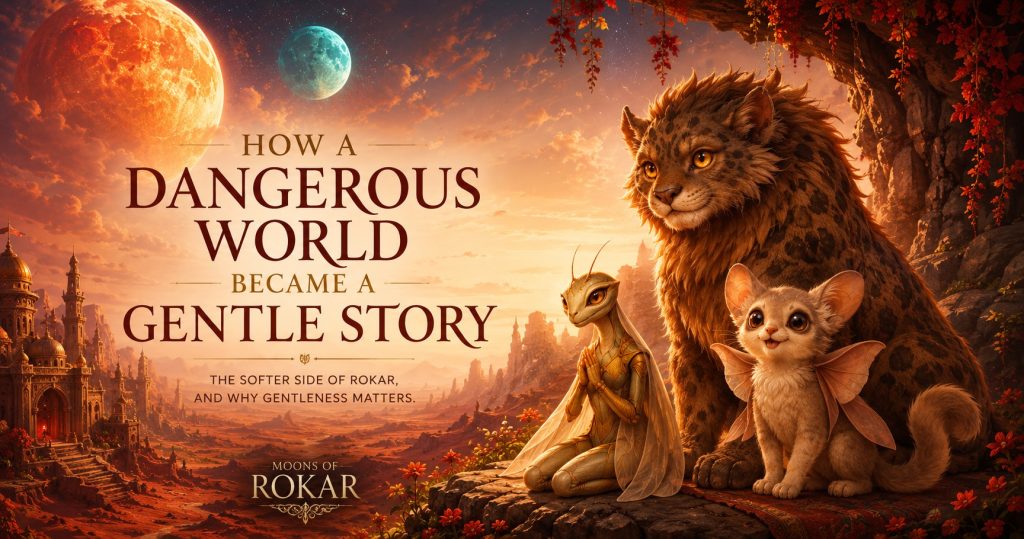
But in Zaxar and Friends, the same larger world becomes softer and warmer. The red sands, glowing stones, and gentle valleys become part of a child-friendly world of kindness, courage, and wonder.
The planet stays the same.
The emotional doorway changes.
Avoiding Generic Fantasy
A lot of fantasy worlds use familiar imagery: green forests, blue skies, gray castles, oceans, and medieval villages.
Those images can be powerful, but Rokar needed distance from that.
If Rokar became too Earth-like, it would lose part of what makes it itself. The red sand, warm stone, dusty light, and twin moons help create the feeling that this is not just another fantasy setting.
This is especially important because Rokar exists across multiple formats: novels, comics, children’s books, audiobooks, and future projects.
The world has to remain recognizable no matter where readers encounter it.
The Desert Shapes the Story
The red desert is not just scenery.
It affects how people move, how cities are built, how danger feels, and how survival works. It changes the emotional rhythm of a scene.
A fight in a red desert feels different from a fight in a forest.
A quiet moment beneath two moons feels different from a quiet moment under a blue sky.
A city carved from warm red stone feels different from a city built from gray rock.
The desert makes Rokar feel exposed, ancient, and physical. It gives the world pressure. It makes distance, shelter, dust, stone, and light matter.
Wazae Belongs to Rokar
Wazae, one of the major places in the Moons of Rokar universe, is not meant to feel like a city dropped onto the planet.
It should feel carved from Rokar itself.
The ancient stone, worn surfaces, dust-filled streets, carved structures, and warm mineral tones all help make Wazae feel connected to the planet’s identity.
The city should feel old before anyone explains its history.
That is one of the most important goals of the visual worldbuilding: the setting should carry memory.
The Twin Moons Complete the Sky
Rokar’s sky is also part of its identity.
The world has two moons:
Nruni, the larger amber moon, appears on the left.
Ecosh, the smaller turquoise moon, appears to the right of Nruni.
That relationship matters because consistency helps a fantasy world feel real.
The moons are not just decoration. They give Rokar an immediate silhouette. They tell the reader, visually, that this is not Earth.
This is Rokar.
Red Can Be Gentle Too
One of the things I like most about Rokar’s red identity is that it does not belong only to war.
Red can be harsh, but it can also be warm.
A dusty red valley can feel peaceful at sunset. Copper light can feel comforting. Soft red sand can become a place where small creatures learn courage. A glowing stone hollow can become magical instead of threatening.
That is important because Rokar is not only a world of conflict.
It also has wonder.
It has friendship, loyalty, protection, quiet moments, and emotional warmth.
The red planet identity gives all of those stories a shared home.
Why It Matters
Worldbuilding is not only about making a place look interesting.
The look of a world should serve the story.
For Rokar, the red desert makes battles feel exposed and physical. The ancient stone makes the cities feel historical. The dust creates uncertainty and atmosphere. The warm colors make the world feel alive. The twin moons create a mythic sky.
Together, these choices help Rokar feel like a place with history before the story begins.
A place with scars.
A place with wonder.
A place that can hold many kinds of stories.
That is why Rokar became a red planet.
Because before the war, before the characters, before the first page, there had to be the world.
And the world was red.
This is the public version of a deeper members-only post. Members get more behind-the-scenes notes about how the universe is being built across novels, comics, children’s books, audiobooks, and future projects.
Click here to become a member. It’s free!

Leave a reply
You must be logged in to post a comment.